




St. Petersburg
Time Zone:GMT +3
Population:5 197 114
Infrastructure:major transportation hub, all major transportation carriers operate numerous flights to and from St. Pete each week
Education:about 100 higher education institution, 60000 graduates annually, including 28000 engineering and IT majors
Companies:Full list of St. Petersburg companies
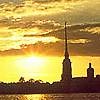 St. Petersburg is the second city in Russia in terms of population, financial and industrial strength and political influence. Many consider St.-Petersburg the technological and cultural capital of Russia. Developed infrastructure and geographical proximity to Western Europe give St.-Petersburg a cosmopolitan character, good for business and comfortable as a place to live.
Approximately 30-35% of all the income from offshore programming in Russia is generated by St.-Petersburg-based providers. Rough estimates show about 100 offshore providers, with staff 3000 software developers in total. Certain domains of specialization can be identified as follows: navigation, billing systems, speech recognition, translation and educational software. Although not all of the companies work exclusively for Western markets and not all are wholly focused on software development. There are about 50 pure companies with 2000 software developers on premise whose core business is offshore software development services.
In terms of the industry maturity St. Petersburg is the leading city in Russia. This is illustrated by the fact that 3 of 7 Russian companies with CMM or CMMI maturity level located in St. Pete: Motorola Software Development Center (CMM Level 5), Star Software (CMM Level 3), Digital Design (CMMI Level 3).
The city has a prominent scientific potential: dozens of R&D institutions and about a hundred higher education institution are located here. 32 St. Petersburg Universities and Academies provide a steady stream of highly qualified and talented software professionals into the local market: about 28,000 graduates students of science and engineering majors every year. There are several main suppliers of the new IT workforce: The St. Petersburg State University, (particularly its Mathematics & Mechanics Faculty), St. Petersburg State Technical University, St. Petersburg State Institute of Mechanics and Optics (gold medal at the 28th Annual ACM International Collegiate Programming Contest). World famous St. Petersburg State University has graduated 7 of Russia’s 16 Nobel Prize winners in science.
Due to geography, Petersburg-based providers are slightly more focused on the nearby Scandinavian markets than providers in other regions of Russia. Other markets where local offshore programming firms are active include the USA, Germany, Switzerland, Belgium, Japan, Czech Republic, Italy, Canada, South Korea, Ireland, France.
In comparison with other Russian development centers, St.-Petersburg has several strong advantages. Firstly, it is a relatively low cost place. This is especially true vis-a-vis Moscow, where the salary of a software developer is at least 50% higher than in St.-Petersburg which results in higher end-prices for offshore development.
Secondly, the domestic IT-industry does not yet impinge on human resources claimed by offshore programming providers. Offshore providers have a preemptive access to human resources and the opportunity to select the best candidates.
Do you need more info? Search for more info about St. Petersburg