Interview: Olga Dmitrieva
SmartSoftware
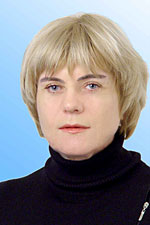 "We can only make a breakthrough using Linux, which makes it possible to solve problems much better and more cheaply."
The box/license model does not in itself guarantee success, but in certain situations it can make breakthroughs possible - small companies can become flourishing firms with turnover of tens or even hundreds of millions of dollars in a short space of time. SmartSoftware general director Olga Dmitrieva tells Computerworld's Dmitry Zhelvitsky she hopes her company can make such a breakthrough.
How does SmartSoftware hope to strengthen its positions on foreign markets?
SmartSoftware is a young company, founded in 2003. From the start we wanted to use cutting-edge platforms and management system development principles. Currently we don't have as large resources as our competitors to push our products. But we've made a big leap thanks to our innovation policy, and can solve many of our clients problems that previously remained unsolved. Our solutions are also much cheaper than domestic competitors and foreign developers.
SmartSoftware develops, installs and supports integrated accounting systems. Our clients are in the hotel and restaurant business, and for them we created solutions like SmartSport, SmartRestaurant, SmartFood, and SmartHotel.
Our most in-demand systems are now SmartRestaurant, which is used to manage restaurants, and SmartSport, which is used to automate accounts and services at sport clubs and fitness centers. They are based on a Linux system.
Our programmers support innovation and use Java in their solutions. Opensource Linux operating systems make possible flexible and reliable solutions to security problems and access rights, and to use the system's computing and communications resources effectively.
As well as the advantages of Linux, the safety and reliability of the whole system are guaranteed by encrypted protocols, biometric user identification, and USB keys to protect latest developments.
You decided to create sectoral solutions using Linux. Why did you not use the widely used Windows?
All of our projects are cross-platform - i.e., Windows and Linux. But Linux has a number of advantages that can be carried across to our program products, such as security, reliability, scalability, and accessibility to small businesses. Many problems with Windows can only be solved by reinstalling the operating system. This problem doesn't happen with Linux, and consequently you don't need high-cost technical support. For example, we provide it to our clients for $100 a month.
Of particular importance for our sectoral solutions is that personnel, including the system administrator, cannot access the database and make any changes. In the services sector, as in trade, it is very tempting to change records of payments made and take the money from the kitty. As a former accountant and financial controller I know the necessity to have fully transparent data, accounting and control to stop this becoming a mass phenomenon.
Non-accountability produces thieves. This has long been understood in developed countries. In Russia people cheat not only the state, but also businesspeople every day. There are whole groups of employees who do business in business. With Linux systems, no-one can make additional changes to the application.
In addition, we figured that Linux is growing in popularity worldwide, and there are still few applications for the system. Consequently, our programs should be in demand not only in Russia, but in other countries.
In addition, a young, small company offering sectoral solutions that work in Windows will find it almost impossible to establish itself on the market, where there are huge numbers of Microsoft partner IT companies. Even if we offer programming products that are better than those of our competitors we have virtually no chance. Our sphere has high market monopolization. Therefore several well-known programs created for the leisure sector remain unfinished, and their price has remained unchanged for over five years. We can only make a breakthrough using Linux, which makes it possible to solve problems much better and more cheaply.
We are hopeful of state support, and these hopes have already been partially justified. The government has already accepted a state program to switch government and educational structures from Windows to Linux. When state orders are placed we are potential developers and are prepared to help our state. This is not a political fashion, but a real economy for licenses, anti-virus software and Friday the 13th attacks, as well as having personnel who are 100% engaged in the working process.
Why are you sure that systems introduced at Russian enterprises will be popular in other countries? After all, every country has its specificities that must be taken into account.
Of course there are specificities, and they must be taken into account. Not all high-quality Russian products can be in demand abroad. For example, Russian accounting systems are unlikely to interest anyone abroad, given the peculiarities of our tax system. But SmartSoftware solutions are essential for managing an enterprise, and in Russia records management is the same as elsewhere in the world.
A number of foreign companies - hotels, restaurants and fitness centers - work in Russia. With regards to management automization, they face the same problems that Russian companies do. Foreign personnel simply throw up their hands when they run into fraud. Sometimes corporate standards only hinder them from keeping normal records.
Our sectoral solutions are another virtue that means their demands can be met not only in Russia but also abroad. This is the option to input information in any language the client chooses. Managers can get reports in a different language. In other words, we support a multilingual environment, and it's not just localization.
How far is the situation on foreign markets favorable for your products?
Unfortunately, our small company cannot carry out expensive research on foreign market. However, we know about our main competitors' products. Currently the leisure industry worldwide has to use unfinished products, which are cumbersome and inconvenient. Users have problems with them if they're not IT specialists.
In addition, because of Microsoft's strict licensing policy, in many countries lots of people are switching to Linux, but there are still very few applications for this system. We hope to fill this gap in the market by using some advantages like programming products that are high quality but relatively low cost.
How can SmartSoftware tell potential foreign clients about these advantages without substantial investment in advertising?
In general, we spend a lot of money on advertising. Naturally, our young and small company does not have its own network of sales and technical support offices. Therefore, we need partners abroad at local IT companies who can sell our products on their own. We are dependent on professionals who support use of Linux. From their side we are already seeing some interest in our products. At an international exhibition we met Jon Hall, executive director of Linux International and a firm believer in the advantages of Linux. He liked our products so much he promised to show them to a friend of his who owns restaurants in California.
How did foreign brands arrive in Russia? We also intend to use various methods used to sell foreign sectoral solutions in our country. In particular, they arrive with foreign companies growing their business in Russia. Managers at these companies already know some programming products and have particular preferences. Russian businessmen similarly build hotels and open restaurants in other countries. If they're using SmartSoftware developments in Russia, then they'll introduce our systems abroad. Through them we can get our products onto foreign markets.
Foreign managers working in Russia are often unhappy with those systems they have to work with. It's possible that they could be a channel to get information about SmartSoftware products to the West. In this situation we have to use every opportunity we get.
Which problems does SmartSoftware see as most pressing?
Unfortunately there are a lot of problems. To develop new areas we need professionals with good knowledge of Linux. However, programmers ask for inappropriately high salaries. When the backbone of our team was formed, the founders and I had to significantly raise the pay scale to find employees. Initially we based our expectations on research data, but as a rule the salary indicators in these data are too low.
Now we would like to expand our business both in terms of our client base and our areas of activity, but we don't have enough resources for this. We are certain that we'll pull in good profits, but only in 2-3 years time. Most Russian investors are not interested in that sort of timescale. In addition, in our sphere very few people with surplus capital understand anything.
Without long-term investment we cannot offer our new employees the sort of salaries that would enable us to compete on equal terms with big companies on the labor market. I suspect that key employees will be poached by competitors who are monitoring our activity very carefully.
There are also problems with promoting Linux. It is especially difficult to explain the benefits of this system, when Windows and Office can be used virtually for free. Companies and state bodies are actively switching to Linux, mainly in countries where pirate versions of operating systems are not freely available. Small and midsize businesses prefer pirate versions of Windows. They may not be the most reliable, but they are free.
Bureaucrats reckon that the market will put everything in its proper place. But what is happening is that there is high market demand for systems that allow people to cheat the financial authorities and business owners. Linux can't be just thrown out onto the market. Support for this system should be a task of state importance.
What can be done in such a situation? It's hard to persuade professionals to stay if someone else is offering them twice as much.
We can develop, but only slowly. New restaurants, fitness centers and hotels are opening in Russia, although we are still far behind developed countries in terms of number per head of population. In other words, demand for our products is growing and will continue to grow. However, to make a breakthrough we need venture capital. We need to improve the solutions we already have, and branch out into new areas. We have an innovation project that entails certain risks. We will look for suitable partners who are willing to put money into our company and become co-founders.
There are lots of good ideas, but to implement them needs money. For example, we wanted to lay the groundwork for a small and uncomplicated device needed for automization that our competitors are selling at high prices. We worked out how much investment it would need and saw that we didn't have the resources for it, although it would take only a small investment. No-one will give us credit, because there's nothing to see yet. We need to find investors who understand and are interested.
What do you think about the idea of building technoparks that in theory should solve a lot of software companies' problems?
I like the idea - if classical technoparks will actually be built with incubators for small businesses and with venture funds. However, it seems that large companies are not interested. They have their own interests. As a result, the technoparks may end up producing nothing. The wrong companies may end up there. State support is necessary primarily for small box/license companies. Offshore programming means we can raise the class of programmers, and this is in their personal interest but at the same time is holding back sectoral development. It deflects professionals from more promising areas. It this was not the case, software companies would be able to create more competitive programming products.